

Pitching Your Regulated Startup to Generalist Investors
Part I/III: Communicating Where You Sit on a Spectrum of Risk

If you’re interested in working through any of this live, I am hosting an event with Patricia Liu (Stanford Pitch Instructor, MIT Angels), and Vanessa Shaw (Founder, Executive Coach) on Thurs. July 9 at Hanwha AI Center. Register here and use promo code NDVC for 50% off.
Raising a round for a health or bio startup used to mean finding a focused fund. Many generalist investors passed on regulated deals reflexively, and most founders accepted that and moved on. That calculus has changed. The funding environment is harder, and founders are pitching generalists whether they planned to or not.
If generalists keep passing on you, it may be that you’re pitching them the same way you’d pitch someone who already knows the regulatory landscape. They don’t. I didn’t. I passed on regulated deals for years before I understood the space well enough to build a fund around it. Now it’s all I do.
What changed wasn’t the deals, it was the information. What I needed to say yes:
a clear position on your regulatory map
a straight answer on what your product does
a revenue model I could validate, and find conviction in
Most founders gave me a complicated story I didn’t have the context to follow because no one told them that a generalist investor needed a different kind of pitch.
This series covers three slides. Each one addresses a concern I never asked a founder to address. If you’re pitching generalists and losing them, start here.

Give Them the Spectrum
When a health or bio founder pitched me and I heard them say “FDA,” I started mentally passing. Not because I evaluated the risk. I didn’t. I assumed the only version of the story I knew: years of trials, hundreds of millions of dollars, a hundred years before I’d see a return.
That was me for a long time. I invested exclusively in things that didn’t touch the FDA: telehealth platforms, digital health tools. Here’s what I know now that I didn’t understand then: regulatory clearance is not one thing. It runs from a band aid to a pacemaker, from pre-existing and predicate to new and novel. A founder who showed me where they sat on that spectrum, in ten seconds, on one slide, could have changed the entire conversation.
The weak slide: what many founders show
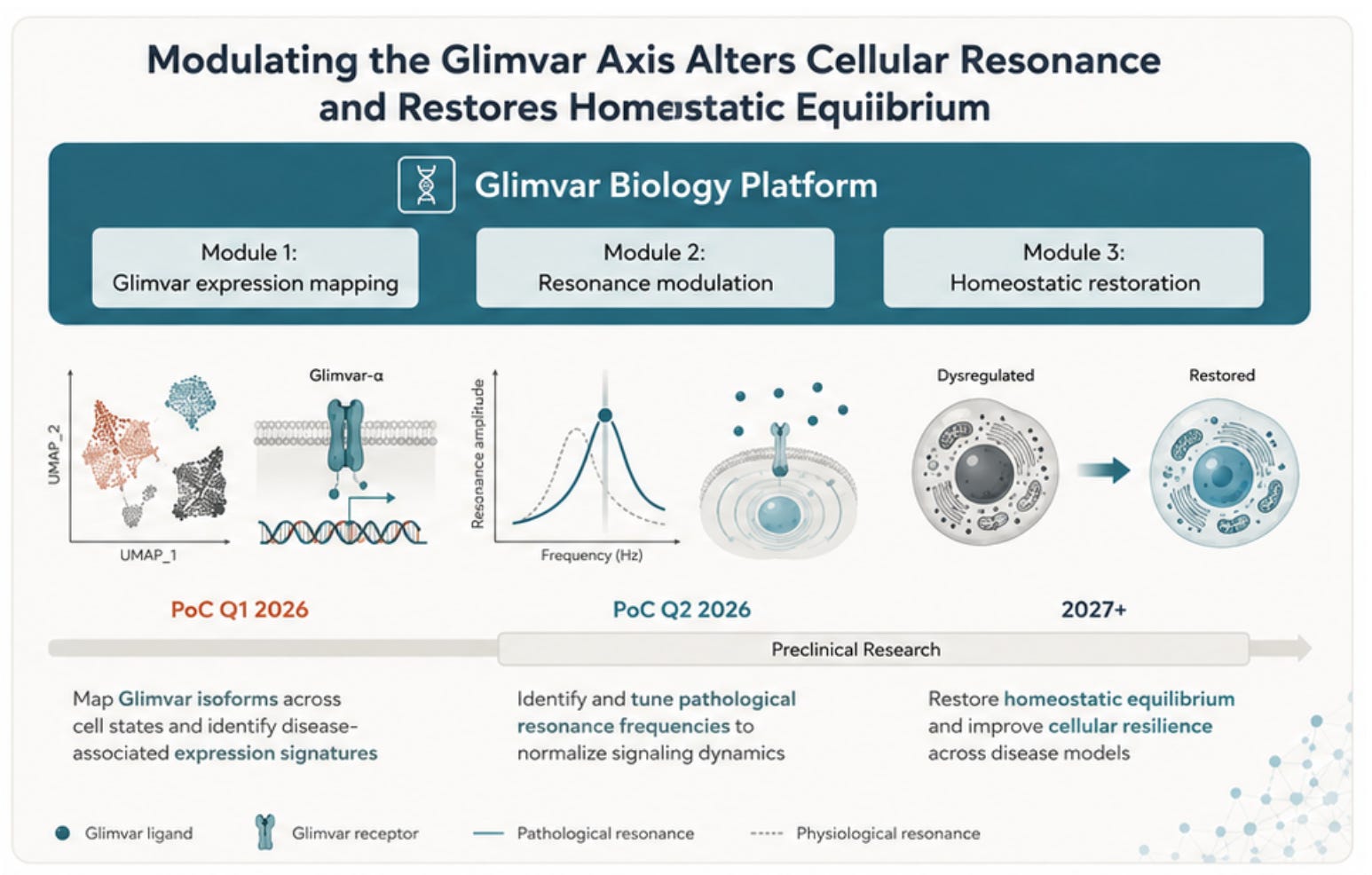
Too many founders handled this with ten slides about the science and regulation, jumbled together with tons of jargon I didn’t know. 510(k)? De Novo? De No Idea what you’re talking about.
Your description does nothing for an investor who cannot place you anywhere on a risk spectrum. It doesn’t tell them where your product sits relative to a brain stent. It doesn’t tell them what the pathway means for your timeline, your burn, or your risk profile. It leaves the blank space blank, and the investor fills it with a scary story.
The strong slide: two bars, one story
Replace those ten slides with a single slide. Two horizontal bars.

The top bar runs from Class I on the left to Class III on the right, with icons showing what sits at each point on the spectrum. Add a marker to show where your product sits:
Class I: band aid, wheelchair, crutches
Class II: syringe, blood pressure cuff, thermometer
Class III: pacemaker, brain stent, cochlear implant
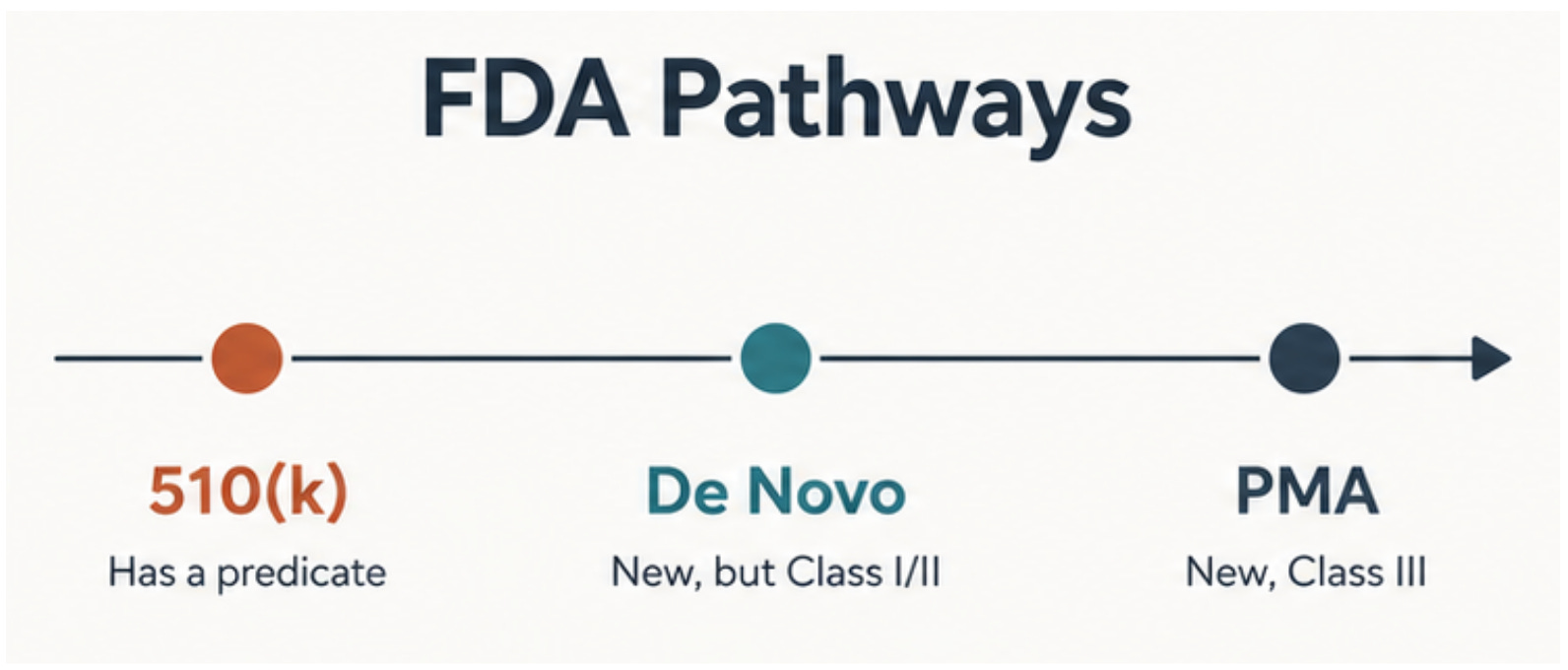
The bottom bar shows three FDA pathways: 510(k), De Novo, PMA, each with a one-line definition, add a marker to show your pathway:
510(k): Has a predicate
De Novo: New, but Class I/II
PMA: New, Class III
Take VitalVision as an example. They make a camera-based system that uses AI to measure patient vitals continuously, without any sensors touching the patient. Their core monitoring algorithms sit on a 510(k) pathway as a Class II device.
Their marker on the top bar lands at Class II: sitting between everyday medical equipment on the left and high-risk implantable devices on the right.
Their marker on the bottom bar lands at 510(k): has a predicate. Review period measured in months, not years.
One sentence below the bars: “Class II on a 510(k) pathway means we have a clear predicate, and clearance within X months. This opens up a market of X. We expect a valuation step-up of X after clearance.” Make sure to spread the good news about your clearance - it’s not just a cost center, it opens the market and drives valuation!
That’s the whole slide. It takes ten seconds to read. A generalist investor who was picturing a decade-long approval process costing $100M can take a deep breath.
Why founders resist this slide
I have a hunch that technical founders resist it because it feels too simple. You feel like you’re talking down to us. We don’t feel that way. When highly technical founders can translate their work for a generalist audience, they sound like Nobel laureates, I promise.
Let generalist investors understand where you are on the regulatory spectrum instead of the worst-case story they’ve been assuming.
Again, if you’re interested in working through any of this live, join us! Patricia Liu (Stanford Pitch Instructor, MIT Angels), and Vanessa Shaw (Founder, Executive Coach), and me, on Thurs. July 9 at Hanwha AI Center. Register Here! Use promo code NDVC for 50% off.